Java For Work
Enhance your Java skills with Vidya's Java for Work course. Designed for professionals, this practical training covers real-world Java programming, best practices, and industry-relevant topics to boost your productivity and career growth.
Description
According to Oracle, almost 20 billion devices run Java. It was the first language for Android, and it powers AI, microservices, serverless, machine learning pipelines, and much of the critical infrastructure in modern applications.
Java For Work starts from primitives like conditionals, loops, and objects and builds up to the topics that matter at work: AI, security, structured concurrency, functional programming, cloud-native APIs, and observability you won't find covered together anywhere else.
What makes this course different
The typical Java course teaches you to code in Java, not to build production software in Java. Those are different skills, so you go back to work ready for toy LeetCode problems and unprepared for what your team faces when it has to deliver for real customers.
Java for Work rests on a simple premise: the greatest asset in professional engineering is understanding the craft of building software, not memorizing syntax. The course uses Java 25, the latest LTS release companies should migrate to as soon as possible, and applies hard lessons learned over many years about architecting and designing code for maintainability and productivity.
When you finish this course, you will be a professional Java engineer.

Course Syllabus
About 17 hours total across four lessons of 4 to 5 hours each. Spread them across four days or combine them into longer blocks.
Lesson 1: A Java Refresher
4 hoursRefresh the fundamentals, from classes and collections to error handling, with IntelliJ and Gradle at your side.
- A Brief History of Java
- Tooling: IntelliJ IDEA and Gradle
- The Anatomy of a Java Class
- Primitives and Objects
- Control Structures
- The Three Collections You Have to Know
- Practical Error Handling
- Enums
- Annotations
Lesson 2: Combining Object-Oriented and Functional Programming
4 hoursBlend object-oriented and functional programming to model your domain and compose behavior cleanly.
- Modeling Domain vs. Modeling Process
- The Power of Polymoprhism: Inheritance and Composition
- Interfaces as Mixins
- Generic Types
- Domain-Driven Design
- The Power of Functions: Modeling Behavior
- Functional Interfaces
- Composing Functions
- Java Streams
- Practical Design Patterns
Lesson 3: Leveling Up with Java
4 hoursLevel up with modern Java: records, pattern matching, structured concurrency, and AI software engineering.
- Package Management Strategies
- Avoiding null: The "Billion-Dollar Mistake"
- Records and Pattern Matching
- Revisiting Conditionals
- Structured Concurrency with Virtual Threads
- Temporal Types
- Experimentation Using the REPL
- Automating Quality
- Using AI for Java Development
Lesson 4: Professional Java
5 hoursBuild production-grade Java with automated quality, persistence, security, observability, and AI.
- APIs and JSON
- Database Persistence
- File Processing
- Cloud-Native Java and GraalVM
- Securing Java Applications
- Testing with JUnit and Testcontainers
- Documentation with JavaDoc and Snippets
- Logging and Observability
- Building AI Applications
Your Instructor
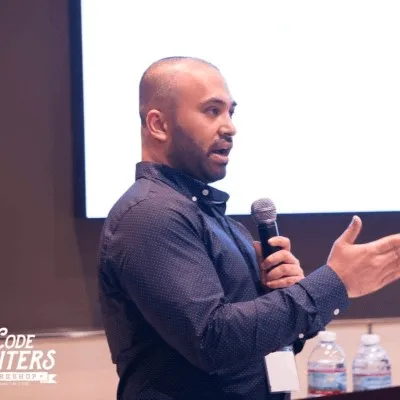
"I am self-taught in Java with many years of experience delivering large-scale solutions ranging from microservices to web and mobile and AI applications for government and commercial clients.I have multiple Java badges on Stack Overflow, and I was even a Sun Certified Java Programmer when that was still a thing and when I thought certifications really meant something."
Want to transform your business?Get in touch today!
Partner with Vidya to modernize your technology, empower your teams, and accelerate your mission.